Guelph, Ontario
Industrial Floor Coatings in Guelph
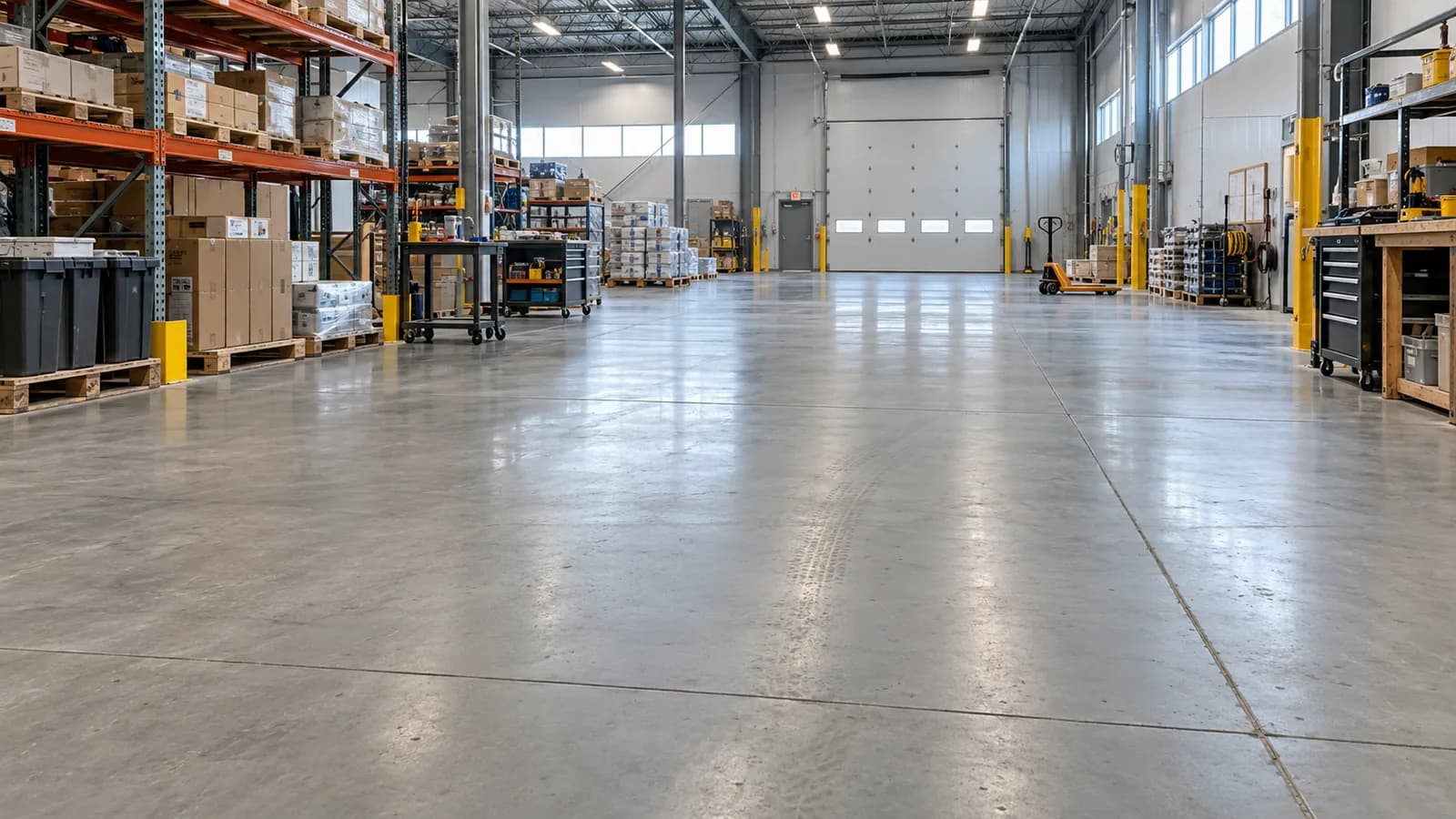
Industrial floor coatings are specified around traffic and exposure. A Guelph machine shop, a warehouse aisle, a food-processing corner, or a vehicle repair bay does not wear like a showroom. Epoxy is one family of products used in these rooms. It is not the only one, and it is not automatically chemical-proof because the word appears in a headline.
Describe the traffic before the colour
Tell the provider what crosses the floor: foot traffic only, pallet jacks, forklifts, steel wheels, dragged bins, or vehicles on stands. Point loads and turning wheels break thin films that look fine in a sample. If the aisle layout matters, a coating project sometimes includes line markings or a different texture in a walkway. Markings are a scope item, not a free extra, and they need a product that will bond to the base system.
Also describe impact. Dropped tools and pallet edges chip a brittle, thin coat. Some industrial systems are built thicker, or use a different binder, because of that. A residential flake system rolled at a decorative thickness is rarely the right reference sample for a plant floor.
Chemicals, heat, and washdown
Name the exposures you actually have: oils, battery acid, solvents, sugars, sanitizers, hot water, or freeze-thaw at a loading door. Chemical resistance charts are written product by product, often with a concentration and a contact time. A chart that says “resistant” to a chemical in a splash may not mean the floor can sit in a puddle of it. Send the safety data sheets, or at least the chemical names, with the inquiry.
Thermal shock — hot wash water on a cool floor — can pop some rigid epoxy systems. Urethane cement and other resins are sometimes chosen for that reason. The resin should be named in the quote after the description you provide, not assigned from a general page. People comparing words can read epoxy and polyurea as categories, then insist the quote names a product.
Joints, cracks, and a slab that moves
Industrial slabs have control joints, construction joints, and cracks that open and close with temperature, including at a dock that sees winter air. A rigid filler in a moving joint often cracks beside the joint and takes the coating with it. Semi-rigid joint fillers are a common industrial detail. They are a line on the quote, and they are not the same product as a decorative crack patch.
Spalls at joints are where wheels first destroy a floor. Repairing those edges before coating is usually part of a durable scope. Cracked concrete explains the difference between a static crack and a joint that is supposed to move. Shot blasting and grinding are both used in plants. The method follows the coating’s required profile and how much contamination is in the paste.
Texture, dust, and the people on the floor
Wet process areas and loading doors need a texture conversation. The same additive that helps a wet boot can make cleaning harder and can change how wheels roll. Ask for the maintenance method the system expects. A floor that can only be cleaned with a chemical that attacks the coating will not stay in service just because the install looked right on day one.
Coating work can involve grinding dust, solvent odour, and isocyanates or amines depending on the chemistry. Ventilation, ignition sources, and neighbouring occupants are part of planning. Crews should follow the safety data sheet and workplace chemical controls. CCOHS chemical-hazard guidance is a general reference, not a site-specific procedure. Do not treat a quote request as permission for untrained staff to mix resins.
Documents that make an industrial inquiry useful
A square-foot guess from a brochure is a weak start. A sketch with aisles, drains, trenches, and equipment that cannot be moved is a strong one. Note whether production can stop, and for how long. Cure windows that ignore a three-shift operation produce a number you cannot use.
- Area, slab age if known, and whether a vapour barrier was specified originally
- Traffic type and the heaviest wheel loads you can describe
- Chemical list with concentrations if you have them
- Photos of joints, spalls, existing coatings, and drains
- Hours the floor can be turned over, including temperature in the building
- In-house rules for hot work, odour, and contractor orientation
- Whether line striping, coves, or trench edges are required
- Who will receive the data sheets and whether a warranty is requested
Questions people ask before requesting a quote
Is industrial epoxy different from garage epoxy?
The word epoxy only names a resin family. Film thickness, fillers, topcoats, and joint details are what separate a plant floor from a garage. Compare those, not the headline.
Can a peeling plant floor be recoated?
Only if the remaining film is bonded and compatible, which often it is not. Many failures are removed to bare, prepared concrete. Repair or recoat explains the decision.
Do you design containment systems?
No. Secondary containment, fire-code finishes, and food-safety approvals have to be confirmed by the designer and the product manufacturer for that use. Say if a specification already exists.
What if we only need the aisle repaired?
Partial work can be sensible when the damage is local and the surrounding film is sound. Edges and traffic across the patch decide whether a spot repair will last. Put that limit in the request.
Sources checked for this page
Last verified 26 October 2026. Product performance still depends on the system named in a quote and the conditions on site.