Guide · updated 2026-10-26
Epoxy vs Polyaspartic for Garage Floors
Epoxy and polyaspartic are not two brands of the same paint. On many garage floors they are two layers in one system. Epoxy often builds the base and holds the flake. A polyaspartic topcoat often takes the wear, the sun at the door, and the shorter cure. Some systems use one family for almost the whole build. This comparison is about roles, not a winner.
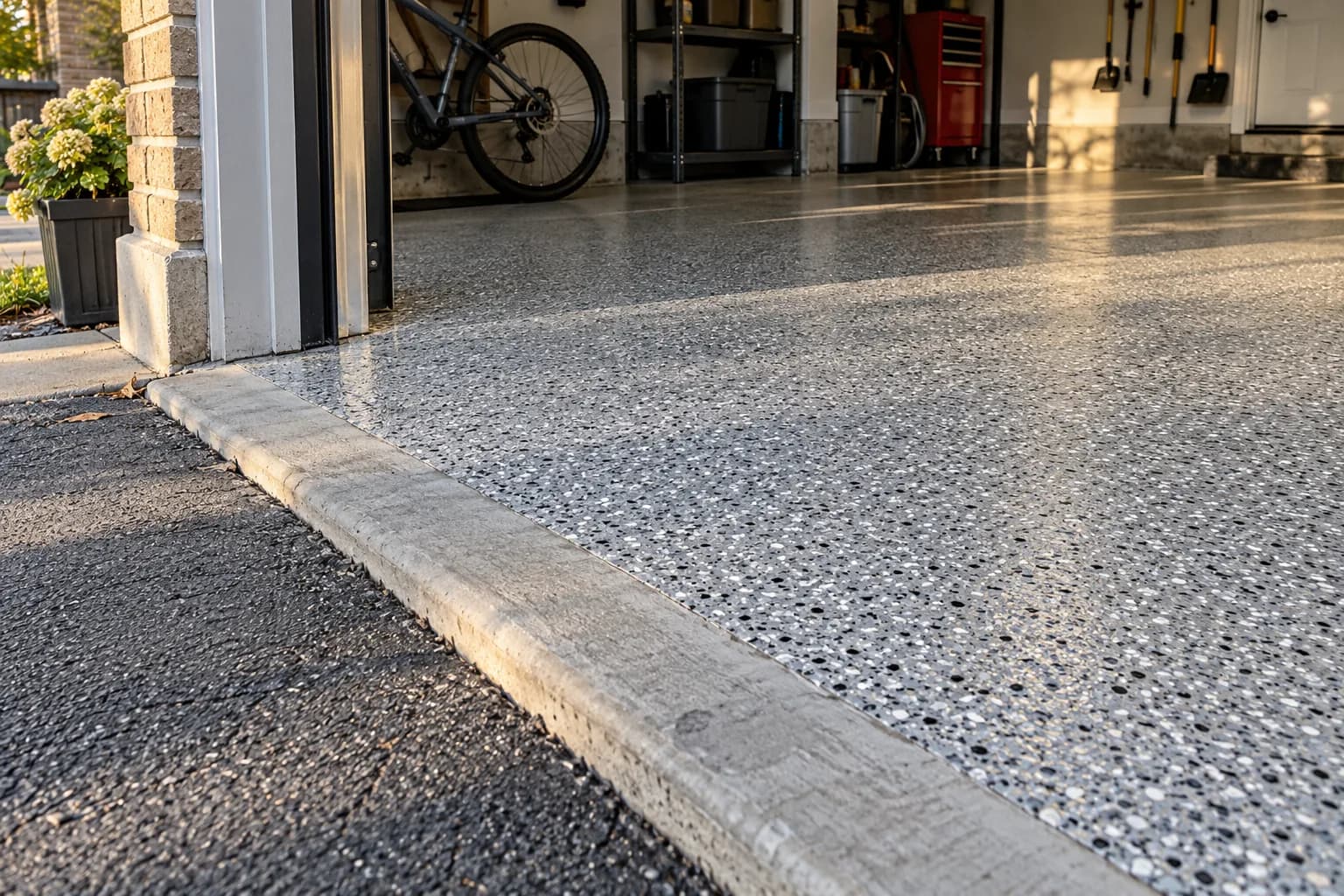
What epoxy usually does
A two-part epoxy cures by a chemical reaction after the resin and hardener are mixed in the stated ratio. On a prepared garage slab it can wet the concrete, build thickness, and grab a flake broadcast. Many clear epoxies amber in sunlight. That is a practical problem at an overhead door and a smaller one in a dark corner. Working time is often longer than a fast polyaspartic, which can make a large bay easier to roll without a dry edge.
Epoxy is sensitive to the surface it touches and to moisture the product is not rated for. None of that is fixed by calling the job premium. The data sheet still sets thickness, temperature, and recoat window.
What polyaspartic usually does
Polyaspartic coatings are aliphatic polyureas. In garages they are widely used as clear or pigmented topcoats because many formulations hold colour better in UV and can be ready for traffic sooner. The sooner is a range on a data sheet, not a promise that every product is walk-on in an hour. Working time is often short. That rewards a crew that has done the prep before the resin is mixed, and it punishes a late start on a hot slab.
Some polyaspartics are not meant to go on bare concrete. If a quote is “all polyaspartic,” ask whether that product allows it. The polyaspartic page goes further into topcoat versus full system.
How to choose without a slogan
List sunlight, how soon you need the car inside, and whether you want flake. Then compare named products. A floor can be epoxy base, flake, and polyaspartic topcoat. A floor can be something else the manufacturer has tested as a system. Avoid a quote that uses both words as decoration and names neither product.
Prep remains the shared requirement. Garage preparation and winter limits decide whether either chemistry gets a fair chance. When the roles are clear, request the project from garage floor coatings.
Questions people ask before requesting a quote
Can I skip epoxy to save time?
Only if the system you are buying is written to be installed that way. Dropping the base coat from a system that needs one is not a shortcut. It is a different, and possibly invalid, assembly.
Which one resists hot tires?
Whichever wear surface the manufacturer rates for that, after a full cure. The category name is not the rating. Ask for the product note, and expect use and cleaning to matter.
Sources checked for this page
Last verified 26 October 2026. Product performance still depends on the system named in a quote and the conditions on site.