Guelph, Ontario
Polyaspartic Floor Coatings in Guelph
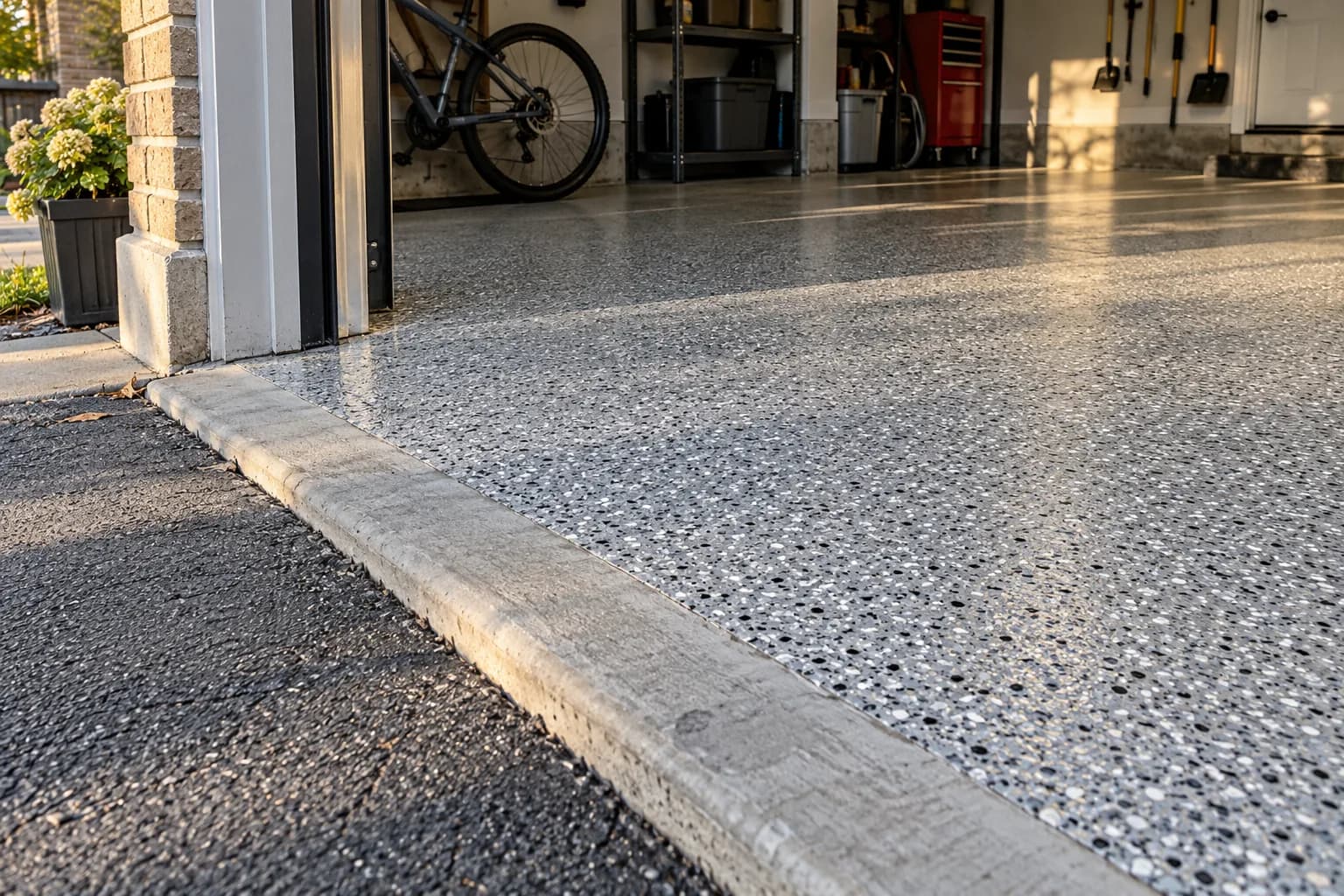
Polyaspartic coatings show up in Guelph garage quotes because many of them cure quickly and hold colour better in sunlight than a clear epoxy. They are not a synonym for epoxy, and they are not automatically the right film for every slab. Use this page when a contractor has used the word, or when you want the quote to be specific about it.
What the word refers to
Polyaspartic coatings are aliphatic polyureas. In floor work they are supplied as multi-component products with a defined mix ratio and a short working time. Installers use them as clear topcoats over a flake or colour coat, as pigmented finishes, and sometimes as a larger share of the whole system. A data sheet for one product does not describe the next one. Solids content, film build, chemical resistance, and the temperature window all change by formulation.
That is why “polyaspartic floor” on a flyer is not a specification. A useful quote names the manufacturer and the product code, or attaches the technical data sheet. If the seller will not name the product, you cannot check minimum slab temperature, recoat time, or what the film is rated to resist.
Topcoat, base coat, or both
On many garage floors the polyaspartic layer is the last coat. Under it, a two-part epoxy or another primer holds the bond to the concrete and locks in decorative flake. Some systems skip epoxy and use a polyaspartic or polyurea build coat directly on prepared concrete. Both approaches exist. Neither is universally stronger. The manufacturer’s instructions decide whether that product is allowed on bare concrete or only over a listed base coat.
If you are comparing a low quote with a higher one, check whether both include the same number of coats and the same chemistry on the wear surface. A single thin coat can be described with the same adjective as a multi-coat system. How to compare floor coating quotes is a checklist for that conversation.
Sunlight, tyres, and colour
Many aliphatic polyaspartic topcoats are chosen because they resist the ambering that clear epoxies can show in sun. That is a reason they are common at garage doors, not a guarantee that every polyaspartic is UV-stable or that the floor under it will not show tire marks. Hot-tire pickup is a heat and plasticizer problem at the contact patch. Resistance, when a manufacturer claims it, belongs to a specific product after a specific cure, not to the category as a whole.
Pigment and flake still live mostly in the layers underneath a clear topcoat. If the clear coat is doing the UV work, the quote should say so. If the entire system is pigmented polyaspartic, the colour is in that film and the repair method later will be different from touching up a clear coat over flake.
Working time and return to service
Fast cure is the practical reason crews like these products, and it is also the practical risk. A short pot life leaves less time to roll a wet edge, especially on a warm day or in direct sun at the door. Cool slabs do the opposite: they can slow the reaction and push the floor outside the same-day story someone repeated from a brochure. Ontario winter work in an unheated garage often runs into a minimum substrate temperature. Winter application in Ontario explains how to ask about that without assuming the job can or cannot proceed.
Return-to-service times on a data sheet are laboratory or stated-condition figures for foot traffic, vehicle traffic, or chemical exposure. Humidity, film thickness, and temperature on the day of the job change them. Ask the installer which figure they are using and what you should keep off the floor until then.
When it may be a poor fit
A fast topcoat does not fix a damp slab, a contaminated surface, or a crack that is still moving. Moisture vapour can blister coatings that were never rated for the emission or the relative humidity inside the concrete. Oil-soaked floors can repel a premium product as easily as a cheap one if the contamination is not removed. If an existing epoxy is peeling, coating it with polyaspartic usually copies the failure into the new layer.
Very chemical-heavy shops, constant hot-water washdown, or forklift traffic may call for a different build than a residential garage topcoat. Those projects belong on the industrial floor coating page even if someone suggested a polyaspartic sealer. Residential basements with a moisture question belong with basement epoxy and a moisture discussion, not with a garage brochure.
Questions worth asking
You do not need to pretend to be a chemist. You do need the quote to be specific enough that two companies are pricing the same kind of work. Coating chemicals are workplace materials. Handling, ventilation, and protective equipment belong to the crew doing the job, consistent with the product safety data sheet and general chemical-safety practice. This page is not a set of mixing instructions.
- What is the product name of the polyaspartic layer, and is it a topcoat only?
- What is underneath it, and is that base allowed by the manufacturer?
- What slab and air temperatures does the data sheet require?
- How long before foot traffic and before a vehicle, at the temperature they expect on site?
- Is flake or pigment in scope, and is the topcoat clear?
- How will they prepare the concrete, and what happens to oil stains?
- Does their company offer a written warranty, and what does it exclude?
Questions people ask before requesting a quote
Is polyaspartic stronger than epoxy?
Not as a blanket rule. Polyaspartic topcoats are often chosen for UV colour stability and a shorter cure. Epoxy is often chosen for build and bond on a prepared slab. The data sheet and the prep matter more than the category label.
Can polyaspartic go straight on concrete?
Only when that specific product is written for bare, prepared concrete. Many polyaspartics are topcoats and are meant to go over a compatible base. The quote should follow the data sheet, not a general habit.
Why do some polyaspartic quotes cost more?
Material price is only one line. Preparation, repairs, the number of coats, and how much old coating must be removed usually move the number more than the resin name. Compare scope before comparing the total.
Will it stay clear next to a sunny garage door?
Many aliphatic polyaspartics are used there because they amber less than many clear epoxies. Confirm UV notes on the actual product. Dirt, tires, and a thin film can still change how the floor looks.
Sources checked for this page
Last verified 26 October 2026. Product performance still depends on the system named in a quote and the conditions on site.