Guelph, Ontario
Commercial Epoxy Flooring in Guelph
Commercial epoxy flooring is a specification problem as much as a colour problem. Retail floors, offices, clinics, showrooms, and back-of-house rooms in Guelph see foot traffic, cleaning chemicals, and a cost for every hour the space is closed. This page is for those rooms. Heavy manufacturing, constant forklift traffic, and chemical containment sit on the industrial page instead.
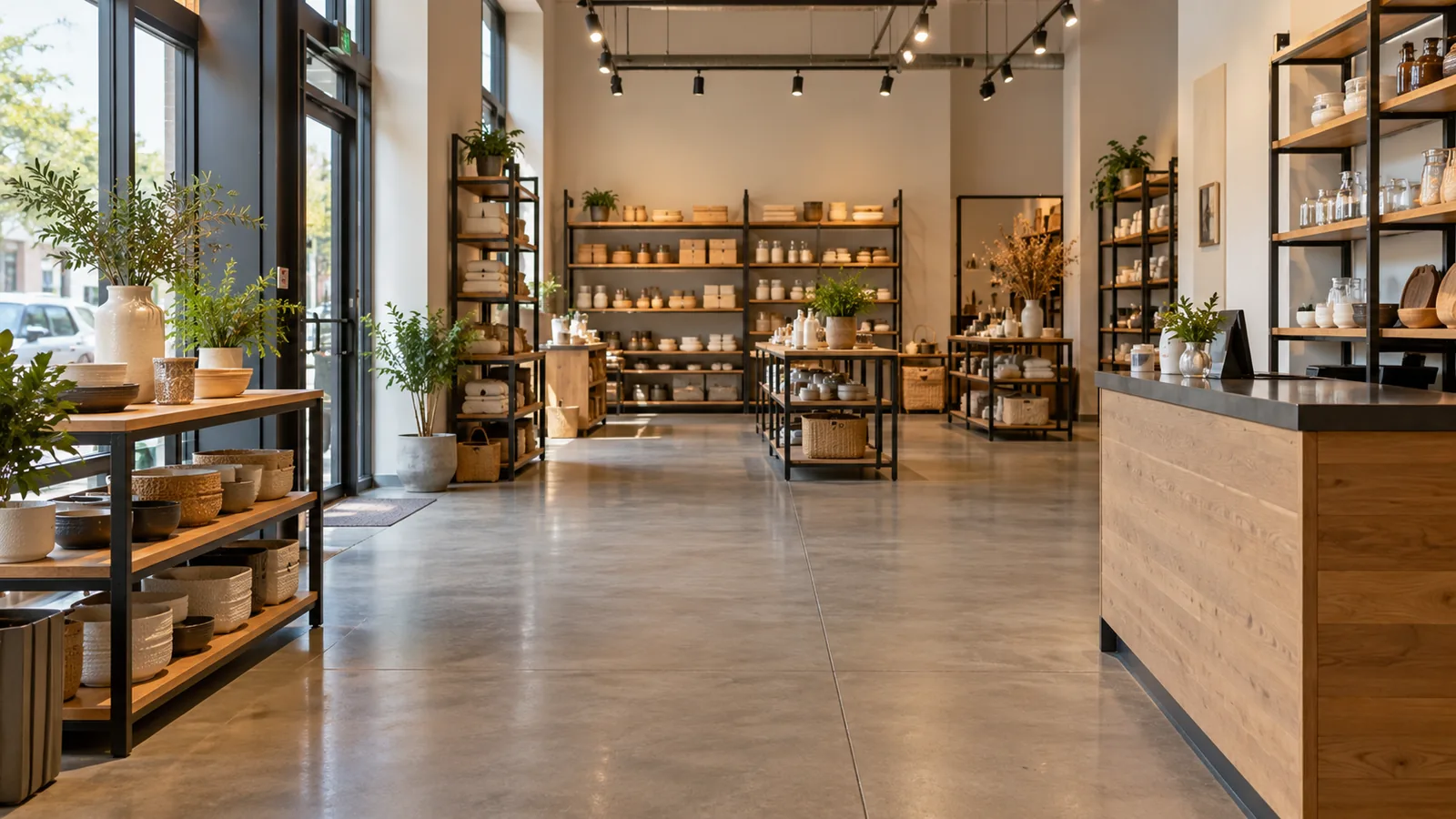
Spaces this request usually covers
A commercial inquiry might be a sales floor, a salon, a restaurant service area, a fitness studio, a veterinary lobby, or an office that wants to stop using failing vinyl composite tile. The concrete may be covered today. The coating is being asked to become the finished floor, sometimes with a cove at the wall and sometimes with a simple termination under baseboard. Say which one you need, because cove work changes time and cost.
Public areas care about slip when the floor is wet from shoes or mopping, about how the surface looks under retail lighting, and about whether a wheeled cart will mark it. Staff-only rooms care more about detergent, pallet jacks used occasionally, and how fast the room can reopen. Those are different wear layers even if both are called epoxy.
Slip, cleaning, and the products already in the closet
A glossy floor can meet a design preference and still be a poor choice beside an entrance mat that stays soaked. Slip resistance is a property of the finished texture, the contaminant, and the footwear, not a sticker that says “non-slip.” If you need a texture, ask for the additive or broadcast and how it will affect cleaning. A rougher floor holds grease and needs a stiffer brush.
List the cleaners the staff actually use: quaternary disinfectants, degreasers, peroxide, or a neutral mop soap. Chemical resistance is product-specific. A floor sold for a showroom may haze or soften under a kitchen degreaser. If the room is a food-service area, also say so. Whether a coating meets a health-department finish rule has to be checked against the requirement you were given and the product data sheet.
Downtime, access, and neighbours
Commercial coating work needs a clear slab, a dust plan, and a cure window before customers return. Grinding creates slurry or dust depending on the equipment. Odour from some resins matters in an occupied building even when the product is within its stated VOC notes. Ask how the crew will isolate the area, protect adjacent finishes, and stage the return to service. Multi-day epoxy cures and faster polyaspartic topcoats are both used. The data sheet, the temperature in the building, and the film thickness set the clock.
After-hours access, freight elevator bookings, and whether fixtures can be moved by your staff should be written down. A quote that assumes an empty room will not survive contact with a showroom that can only close on a Sunday. Phasing — half the floor this week, half next — is sometimes possible and sometimes a visible seam. Ask before you assume.
What a commercial quote should specify
Send drawings or a measured sketch, photos of the current floor, and any landlord or insurer note you already have. You are not expected to write a CSI specification. You are expected to notice if the quote never mentions preparation. Concrete preparation is the usual reason a commercial floor fails at the bond line, especially over old adhesive or a hard-troweled slab.
- Area and whether stairs, ramps, or a second room are included
- Removal of existing tile, carpet, adhesive, or coating
- Mechanical preparation method and joint treatment
- Moisture testing method if the slab is on grade
- Named products, number of coats, and texture or slip additive
- Cove or termination detail, and colour notes
- Hours of work, dust control, and the cure window before traffic
- Exclusions: moving millwork, base building repairs, overnight security
- Whether the bidding company offers a warranty, and the exclusions
When the project is really industrial
If the floor sees forklifts all day, steel-wheel traffic, thermal shock, or process chemicals, do not force it into a retail epoxy description. Industrial floor coatings are scoped around impact, joints, and exposure lists. A decorative metallic showroom floor is the other direction. Decorative epoxy belongs in the conversation when appearance is the reason for the project, with the same prep and moisture questions underneath.
Guelph commercial rooms still sit on local concrete, in a climate that tracks salt into entrances all winter. Entrance mats and a cleaning plan do more for an entry slab than an extra adjective in the product name. Mention the entrance specifically so the texture there can differ from the field of the floor.
Questions people ask before requesting a quote
Can you quote from photos alone?
Photos help a provider decide whether a visit is worthwhile. Thickness of an old floor, moisture, and flatness are hard to judge from a picture. Most commercial scopes get confirmed on site before a number is final.
Do you publish a price per square foot?
No. Removal, prep, repairs, the system, and after-hours labour move commercial numbers too far for a single rate to be honest. Ask each quote to break those lines out.
Is epoxy the only commercial option?
No. Urethane cement, polyaspartic topcoats, and other resin systems are used when heat, speed, or chemicals require them. The right name is the one the exposure supports, not the one in the search phrase.
Who carries insurance for the work?
Ask the company that would perform the work for the coverage they carry and for any certificate your landlord requires.
Sources checked for this page
Last verified 26 October 2026. Product performance still depends on the system named in a quote and the conditions on site.